














Who are sleepwalkers?

For many years, it was believed that somnambulism, also known as sleepwalking, was associated with hysteria. Fortunately, years of research have led to a new theory that classifies sleepwalking as a typical sleep disorder. While unconscious at night, we can perform a number of complex motor activities, such as walking, eating, and even having complicated conversations with other people. However, upon waking, we don't remember any of these activities and begin to wonder if we should see a specialist. Do sleepwalkers have reason to be concerned?
The Mystery of Sleepwalking
Somnambulism is a disorder that occurs in 15% of children and 3% of adults. The clinical symptoms are uncontrolled activities without complete waking during sleep. Typical sleepwalking episodes occur approximately one hour after falling asleep, as we then enter a deep sleep phase. Where does this come from? This is when our sleep is most effective and deepest. At this time, growth hormones are released and we recover most effectively. Episodes of sleepwalking are usually observed before puberty. After age 10, they begin to disappear. Interestingly, somnambulism is still detected in 24% of approximately 13-year-olds who experienced these episodes in their early childhood. There are hardly more sleepwalkers among boys than girls. Episodes of somnambulism are accompanied by mixed states of consciousness with low environmental sensitivity, a mask-like facial expression, unclear speech, and sometimes mumbling. Movements are often chaotic and imprecise. There is a temporary state of disorientation upon waking. Sounds and pain sensations are likely absent, as somnambulists apparently neither hear words addressed to them nor feel pain.
What is the cause?
A 2002 study by professors Wills and Garcia shows that the symptoms of somnambulism result from faulty arousal from deep sleep to NREM sleep. There is also evidence of a genetic predisposition that leads to such disorders. Studies conducted on twins showed that somnambulism occurs five times more frequently in identical twins than in fraternal twins. Furthermore, 80% of the sleepwalkers examined reported that similar episodes appear in their families.
Somnambulism in children could result from the immaturity of the nervous system. In adults, however, the reasons are completely different. Sleep deprivation is considered the primary cause. When there is a strong stimulus, such as the urge to use the bathroom, part of the nervous system tries to continue sleeping, while the risk of incomplete waking increases. Chronic stress and discomfort resulting from various illnesses also have consequences. It happens that people with diabetes wake up when their blood sugar levels drop rapidly. Our body can also react this way to common nighttime discomforts, such as when the pillow is improperly padded, the temperature is off, or the sheets are uncomfortable.
Medicine for Sleepwalkers
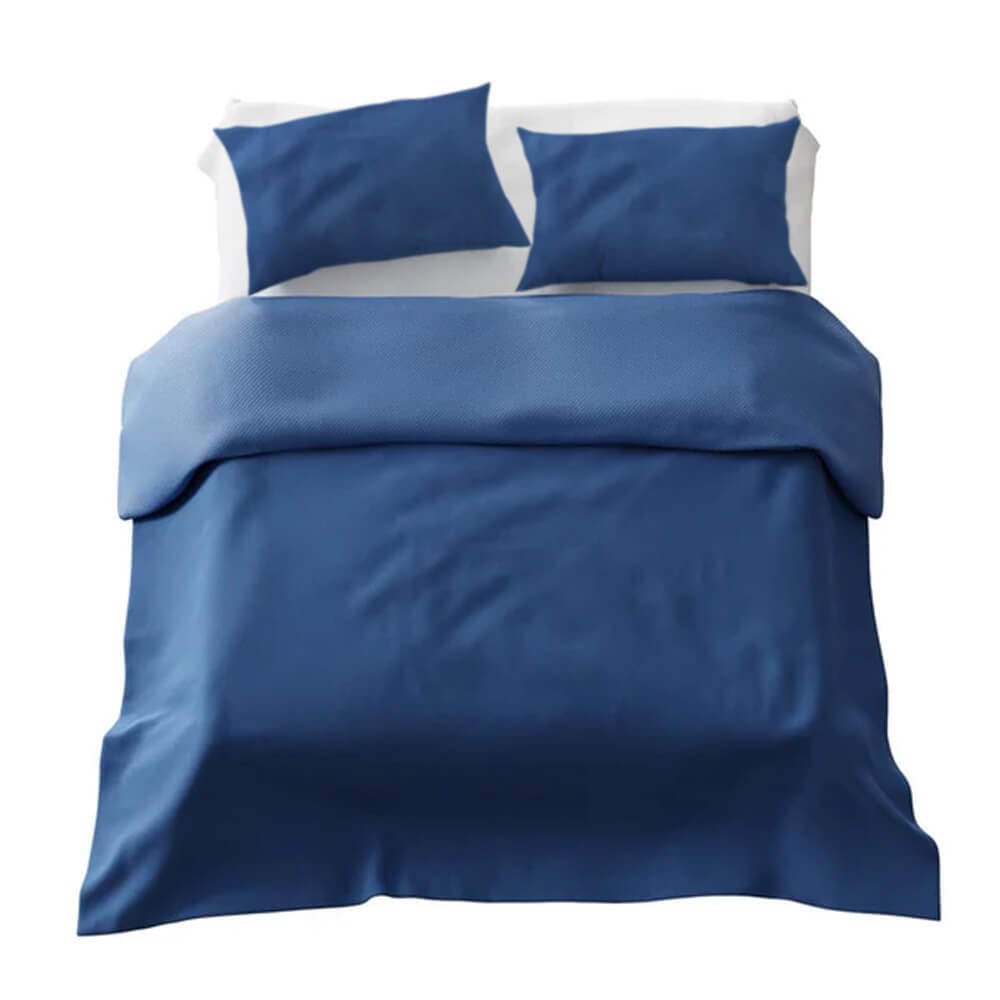
Don't panic if you notice such symptoms in yourself or your child. First, we need to pay attention to reactions and the body and think about possible causes. They can turn out to be completely harmless. Among many children and adults, the disorder can occur as a result of sensory problems. Long-lasting sleep problems and difficulties could sometimes be solved with a weighted blanket. A variety of positive signals are sent to our brain that make us feel calm, safe, and secure. When our brain is not distracted by fear and stress at night, we have a chance for complete and effective sleep without sleepwalking. A blanket with a special heavier fill (custom made) stimulates the proprioceptive system, which is responsible for deep sensation. Should professional therapy be needed, the first step is lighter sleep. The lighter the sleep, the lower the risk of getting up and wandering around uncontrollably. A 20-minute nap during the day could also be a good solution, as it guarantees an identical effect to pharmacological treatments.


Leave a comment
This site is protected by hCaptcha and the hCaptcha Privacy Policy and Terms of Service apply.