




Scienza sulle coperte terapeutiche
Scientifically sound
Improved well-being
Many participants answered the question of when they feel more relaxed with "When I use the weighted blanket"
Reducing Anxiety Symptoms
of the adults tested experienced a reduction in anxiety symptoms after using the 13 kg weighted blanket.
Significant improvement in insomnia
In a randomized study, 59.4% of users experienced a ≥50% reduction in insomnia severity after 4 weeks
They found it more soothing
78% preferred the weighted blanket as a comforting/calming method.


Weighted blankets for insomnia
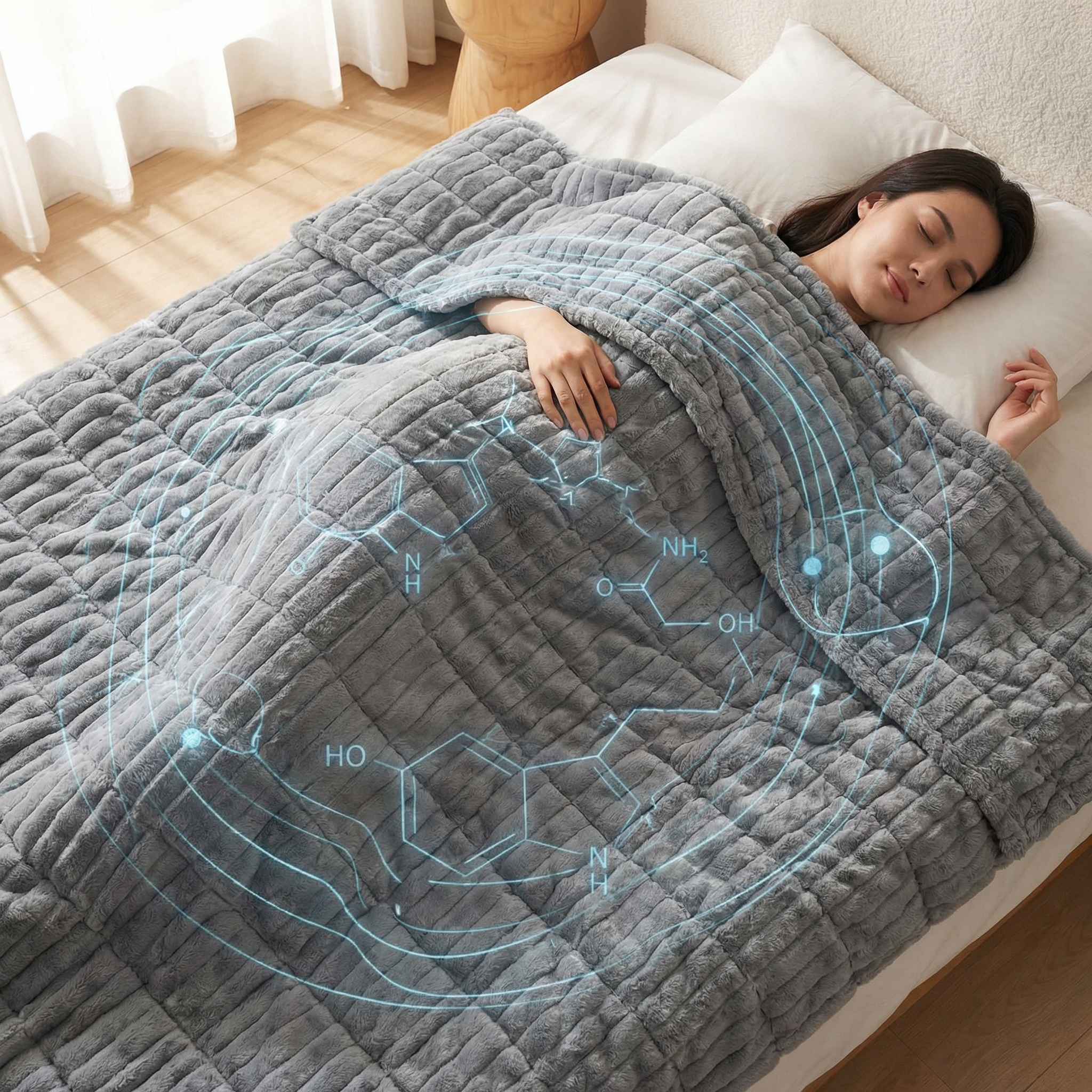
Weighted blankets are often recommended for people suffering from insomnia. The 2015 study "Positive Effects of a Weighted Blanket on Insomnia" (see Study 1) by Ackerley, R, Badre, G. and Olausson, H. showed the effects of a weighted blanket on insomnia using objective and subjective measurements. Objectively, the researchers found that sleep latency and movements of the subjects decreased when using the weighted blanket. Subjectively, participants liked sleeping with the blanket, found it easier to fall asleep, and had better sleep, feeling more rested in the morning. Overall, it was shown that participants who used the weighted blanket slept more calmly at night. The study's results show that a weighted blanket can help reduce insomnia through altered tactile stimuli, thus representing an innovative, non-pharmacological approach and a complementary tool for improving sleep quality. This approach is supported by another recent study, "Weighted Blanket Improves Sleep And Increases Relaxation" (see Study 2). According to the participating subjects, using a weighted blanket reduces feelings of stress, increases feelings of relaxation, and can improve sleep and reduce nocturnal waking time.
Weighted blankets for autism
The first study investigated the effect of weighted blankets on sleep in children on the autism spectrum. The main focus was on sleep duration. The study concluded that the weighted blanket had no effect on sleep duration. However, the researchers observed that weighted blankets were preferred by both children and parents. What the study did not investigate was the blanket's effect on sleep quality. The second study showed that weighted blankets improved the general sleep quality of children with autism spectrum disorder, particularly the time it took to fall asleep, the number of nocturnal awakenings, sleep duration, and morning behavior. This study shows that the need for additional research studies to improve sleep quality in children with autism spectrum disorder and sensory hypersensitivity using more robust methods and more objective measurement instruments should be an important aspect of research.
Our Own Sleep Study on the Effect of Weighted Blankets
We wanted to know more. That's why we conducted our own study on the effects of weighted blankets. We put it to the test ourselves with 100 participants and gained some interesting insights into how weighted blankets work.